

Calf exercises
The 8 staple movements, taken from the 3,215 exercise guides in the SETR app: technique, recommended volume, cues and classic mistakes.
The calf is two muscles. The gastrocnemius, the visible one, crosses the knee, so it works hardest with a straight leg, standing. The soleus underneath only works well with the knee bent, seated. A complete programme has one of each. Calves tolerate high reps; full range and a pause at the bottom matter more than the load.
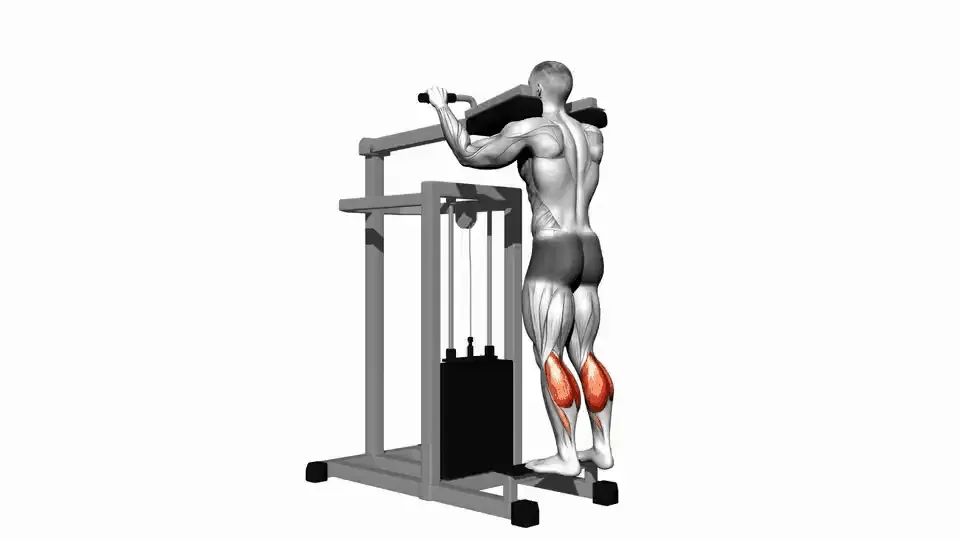
1. Standing calf raise machine
Lever Standing Calf Raise
- Sets
- 3-4
- Reps
- 10-15
- Tempo
- 3-0-1-0
- Equipment
- Machine
- Level
- Beginner
- Muscles worked
- Calves
How to do it
- Set yourself up in the machine, shoulders braced under the pads, balls of your feet on the platform.
- Keep your legs straight and your torso upright.
- Rise onto your toes as high as you can.
- Lower under control to a full calf stretch.
Tips
- Use the machine's full range, heels well down in the stretched position.
- Pause at the top of each rep.
- Keep a slow tempo to maximize time under tension.
Mistakes to avoid
- Bending your knees during the movement.
- Bouncing instead of controlling each rep.
- Using a load that is too heavy and cuts your range of motion.
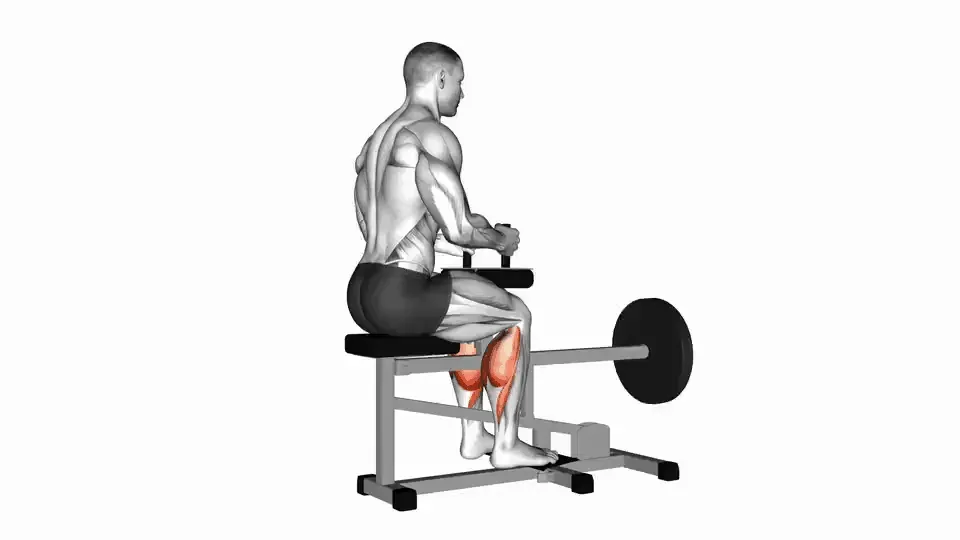
2. Seated calf raise
Lever Seated Calf Raise
- Sets
- 3-4
- Reps
- 10-15
- Tempo
- 3-0-1-0
- Equipment
- Machine
- Level
- Beginner
- Muscles worked
- Calves
How to do it
- Sit in the machine, knees under the resistance pad, balls of your feet on the platform.
- Grab the handles and stabilize your torso.
- Rise onto your toes as high as you can.
- Lower under control to a full calf stretch.
Tips
- Sitting with your knees bent targets your soleus more than your gastrocnemius.
- Pause at the top of each rep.
- Keep a slow tempo to maximize time under tension.
Mistakes to avoid
- Bouncing instead of controlling each rep.
- Using a load that is too heavy and cuts your range of motion.
- Not lowering far enough to benefit from the stretch.
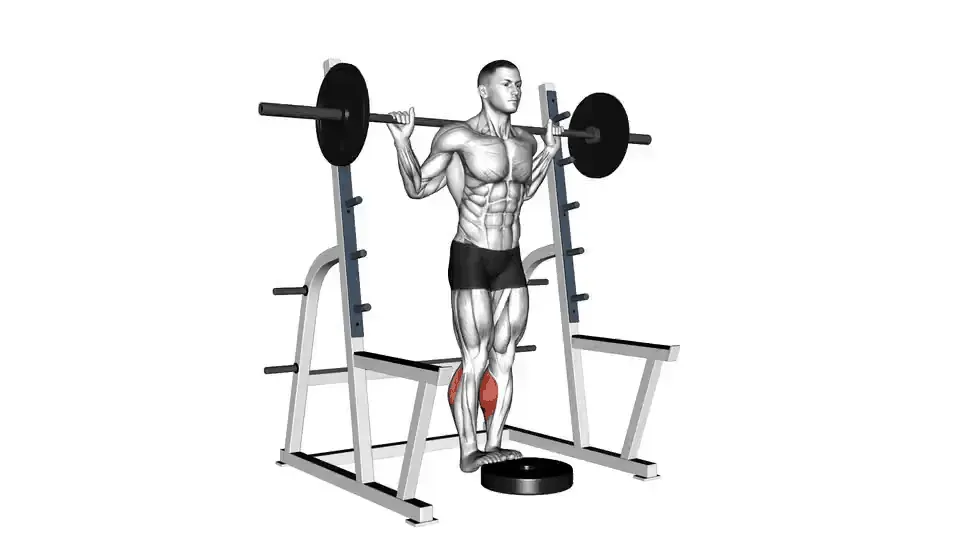
3. Barbell standing calf raise
- Sets
- 3-4
- Reps
- 10-15
- Tempo
- 3-0-1-0
- Equipment
- Barbell
- Level
- Beginner
- Muscles worked
- Calves
How to do it
- Place the bar across your upper back as for a squat, balls of your feet on an elevated surface if possible.
- Keep your legs straight and your torso upright.
- Rise onto your toes as high as you can.
- Lower under control to a full calf stretch.
Tips
- Use an elevated surface to get a full range, heels hanging off.
- Pause at the top of each rep to maximize the squeeze.
- Keep the tempo slow — calves respond well to time under tension.
Mistakes to avoid
- Bouncing at the bottom instead of pausing in a full stretch.
- Bending your knees during the movement.
- Using too heavy a load that reduces your real range.
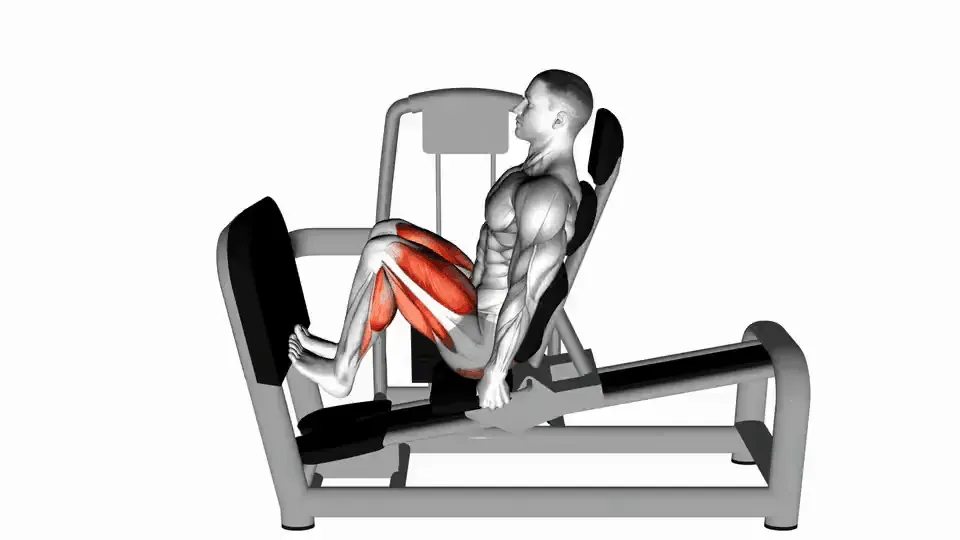
4. Leg press calf raise
- Sets
- 3-4
- Reps
- 6-10
- Tempo
- 3-1-1-0
- Equipment
- Machine
- Level
- Intermediate
- Muscles worked
- Calves
How to do it
- Sit in the leg press machine, legs almost straight.
- Place only the balls of your feet on the bottom of the platform.
- Push the platform away by rising onto your toes.
- Lower under control to a full calf stretch.
Tips
- Keep your legs almost straight to isolate your calves rather than your quads.
- Pause at the top of each rep.
- Keep a slow tempo to maximize time under tension.
Mistakes to avoid
- Bending and straightening your knees during the movement.
- Bouncing instead of controlling each rep.
- Using a load that is too heavy and cuts your range of motion.
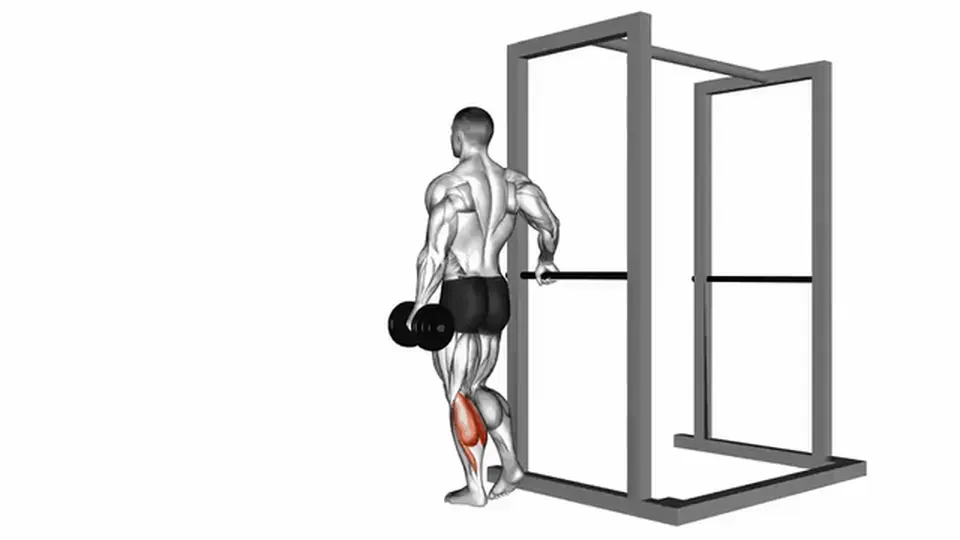
5. Single-leg dumbbell calf raise
Dumbbell Single Leg Calf Raise
- Sets
- 3-4
- Reps
- 10-15
- Tempo
- 3-0-1-0
- Equipment
- Dumbbells
- Level
- Beginner
- Muscles worked
- Calves
How to do it
- Stand on one leg, the ball of your foot on a step, a dumbbell in the hand on the same side.
- Hold a support with your other hand for balance.
- Lower your heel below the level of the step to fully stretch your calf.
- Rise onto your toes as high as you can, then lower slowly.
Tips
- The full range, low stretch and high extension, does all the work.
- Pause for one second at the top and bottom of each rep.
- Work your weaker leg first and match the other one to it.
Mistakes to avoid
- Bouncing in the bottom position instead of holding the stretch.
- Bending your knee to help you rise.
- Hauling yourself up by pulling on the support with your free hand.
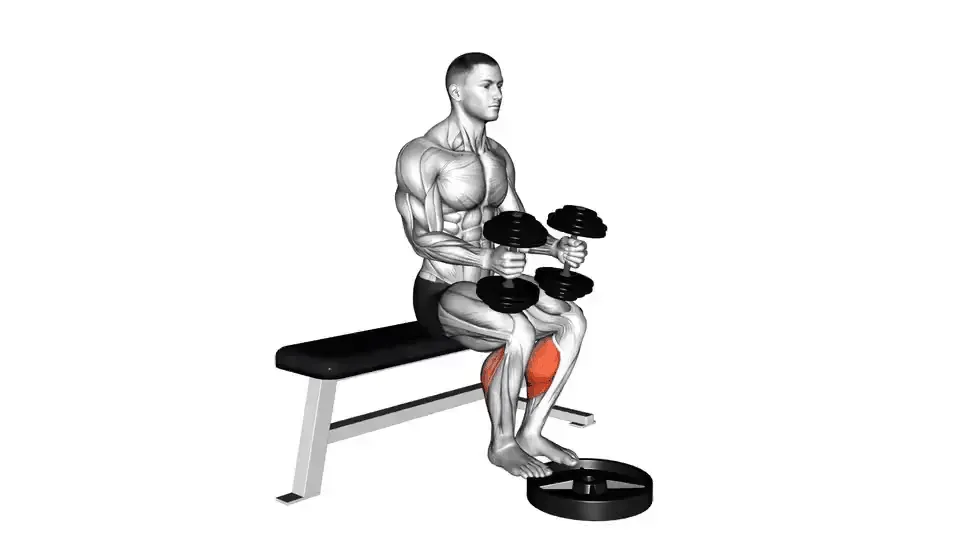
6. Seated dumbbell calf raise
Dumbbell Seated Calf Raise
- Sets
- 3-4
- Reps
- 10-15
- Tempo
- 3-0-1-0
- Equipment
- Dumbbells
- Level
- Beginner
- Muscles worked
- Calves
How to do it
- Sit on a bench, a dumbbell standing upright on each knee, balls of your feet on an elevated surface.
- Keep the dumbbells steady by holding them at the top.
- Rise onto your toes as high as you can.
- Lower under control to a full calf stretch.
Tips
- The seated position targets your soleus more, beneath your gastrocnemius.
- Pause at the top of each rep to maximize the squeeze.
- Lower slowly to make full use of the stretch.
Mistakes to avoid
- Letting the dumbbells tip over on your knees during the movement.
- Bouncing instead of controlling each rep.
- Shortening the range at the top or bottom of the movement.
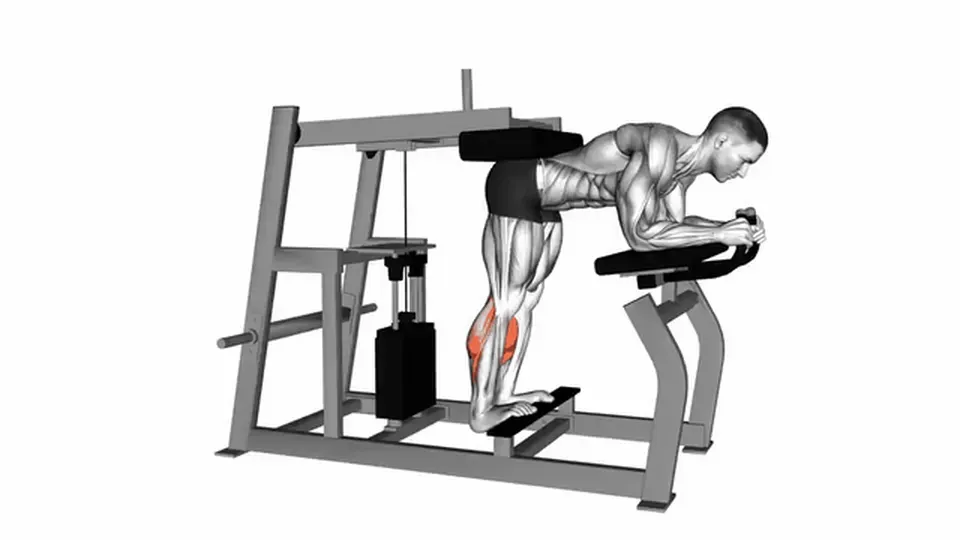
7. Donkey calf raise
Lever Donkey Calf Raise
- Sets
- 3-4
- Reps
- 10-15
- Tempo
- 3-0-1-0
- Equipment
- Machine
- Level
- Beginner
- Muscles worked
- Calves
How to do it
- Set yourself up in the machine, torso leaning forward, pad on your lower back.
- Place the balls of your feet on the platform, heels hanging off.
- Lower your heels to a full calf stretch.
- Rise onto your toes as high as you can and hold the squeeze.
Tips
- The bent-over position puts your gastrocnemius in a maximal stretch: that's the whole point of the donkey raise.
- Keep your legs straight without locking your knees.
- Pause at the top and bottom of each rep.
Mistakes to avoid
- Bouncing at the bottom.
- Bending your knees to help you rise.
- Shortening the range by skipping the stretch.
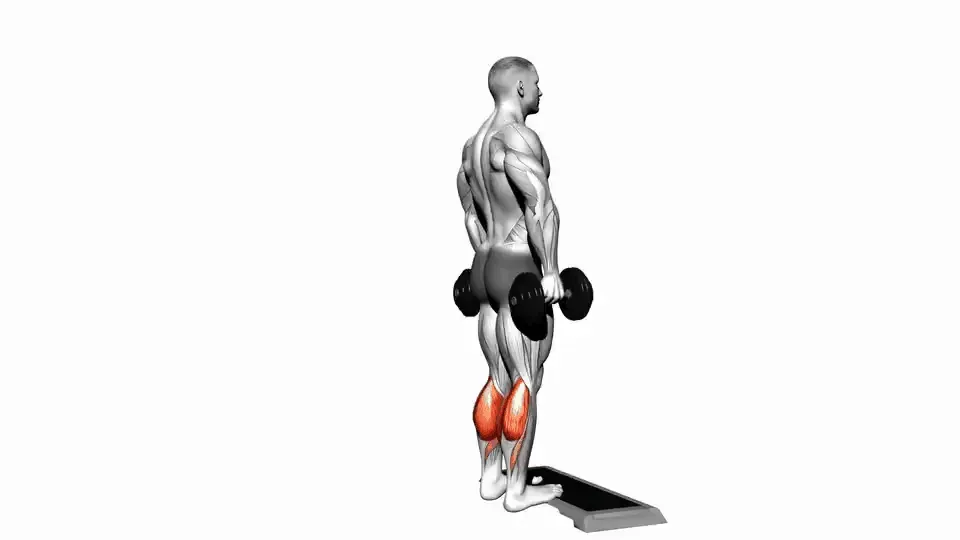
8. Bodyweight standing calf raise
Standing Calf Raise
- Sets
- 3-4
- Reps
- 10-15
- Tempo
- 3-0-1-0
- Equipment
- Bodyweight
- Level
- Beginner
- Muscles worked
- Calves
How to do it
- Stand with your feet hip-width apart, balls of your feet on an elevated surface if possible.
- Keep your legs straight and your torso upright.
- Rise onto your toes as high as you can.
- Lower under control to a full calf stretch.
Tips
- Use a full range — a deep stretch at the bottom, a high rise at the top.
- Pause at the top of each rep.
- Vary your foot position (toes in/out) between sets to work your calves differently.
Mistakes to avoid
- Bouncing at the bottom instead of pausing in a full stretch.
- Bending your knees during the movement.
- Rushing through reps with momentum.
Tempo is read in seconds: lowering, pause at the bottom, lifting, pause at the top. “3-1-1-0” means three seconds down, a one-second pause, one second up, then straight into the next rep.
How to combine them
There is no need to do them all in one session. Two or three exercises per muscle are enough: a heavy compound lift first, while you are fresh, then one or two more targeted moves.
Aim for roughly 10 to 20 sets per muscle per week, spread over two sessions, with sets taken to within 1 to 3 reps of failure. Beyond that, fatigue grows faster than results.
Keep the same main lifts for at least eight weeks: it is the only way to tell whether you are genuinely progressing.
88 exercises for this muscle in the app