

Back exercises
The 8 staple movements, taken from the 3,215 exercise guides in the SETR app: technique, recommended volume, cues and classic mistakes.
The back is trained along two lines of pull. Vertical pulls (pull-ups, lat pulldowns) widen the upper back by hitting the lats hardest. Horizontal pulls (rows) add thickness by also working the rhomboids and mid-traps. A good programme uses both, plus a posterior-chain lift such as the deadlift.
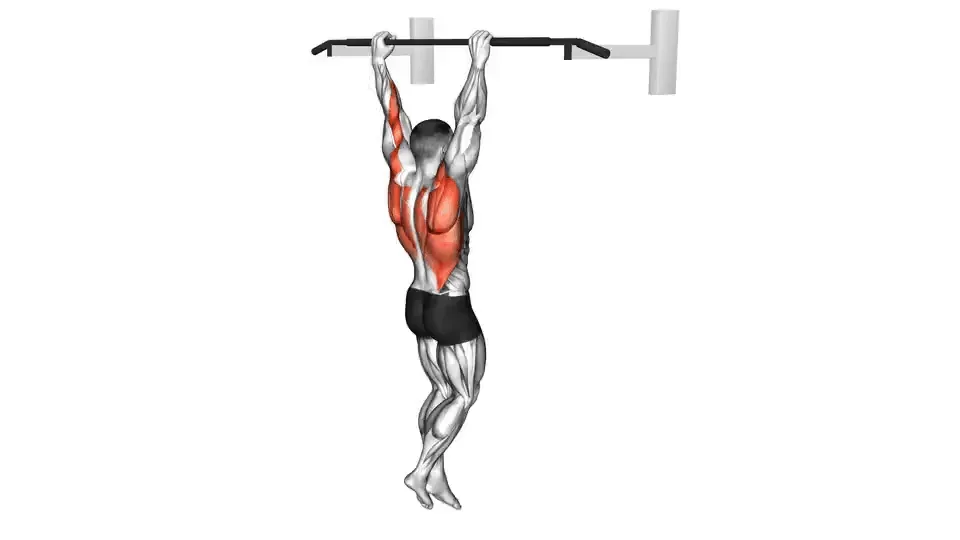
1. Pull-up
- Sets
- 3-4
- Reps
- 6-10
- Tempo
- 3-1-1-0
- Equipment
- Pull-up Bar
- Level
- Intermediate
- Muscles worked
- Back · secondary : Biceps
How to do it
- Hang from the bar with an overhand grip, hands slightly wider than your shoulders.
- Pull your body up until your chin clears the bar.
- Squeeze your back hard in the top position.
- Lower under control to full arm extension.
Tips
- Keep your body stable, without swinging, throughout the pull.
- Think about pulling your elbows toward the floor rather than just raising your chin.
- Control the descent rather than dropping down.
Mistakes to avoid
- Swinging your legs to build momentum.
- Not lowering all the way to full arm extension.
- Only using a partial range at the top of the movement.
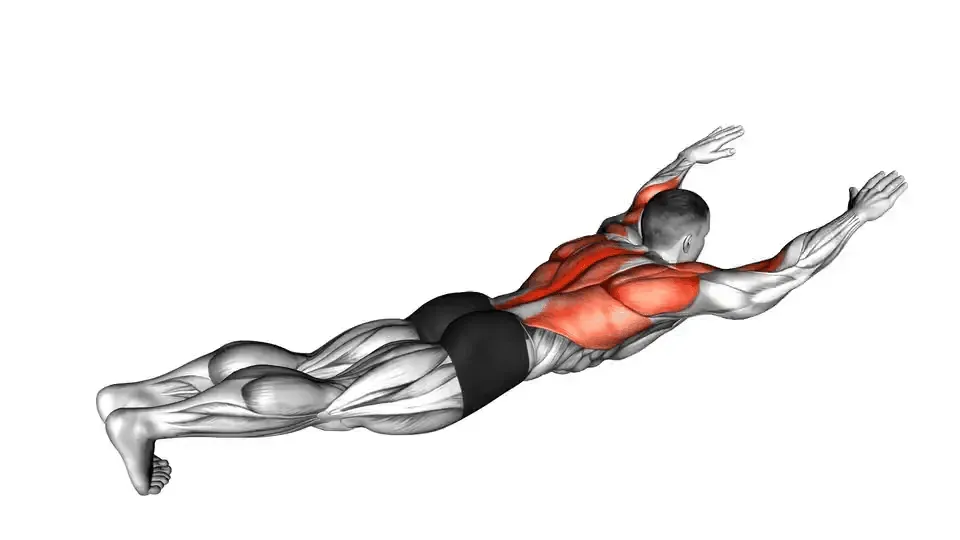
2. Lat pulldown
- Sets
- 3-4
- Reps
- 6-10
- Tempo
- 3-1-1-0
- Equipment
- Bodyweight
- Level
- Intermediate
- Muscles worked
- Back · secondary : Biceps
How to do it
- Sit facing the high pulley, thighs wedged under the pads.
- Grab the bar with an overhand grip, shoulder-width apart.
- Pull the bar toward your upper chest, driving your elbows down and back.
- Return under control to full arm extension.
Tips
- Keep your torso leaning slightly back, without overdoing it, throughout the pull.
- Think about bringing your elbows toward your hips rather than just pulling with your hands.
- Avoid pulling the bar behind your neck.
Mistakes to avoid
- Leaning back too far to help the pull.
- Using torso momentum instead of a controlled pull.
- Pulling the bar behind your neck, which stresses your shoulders.
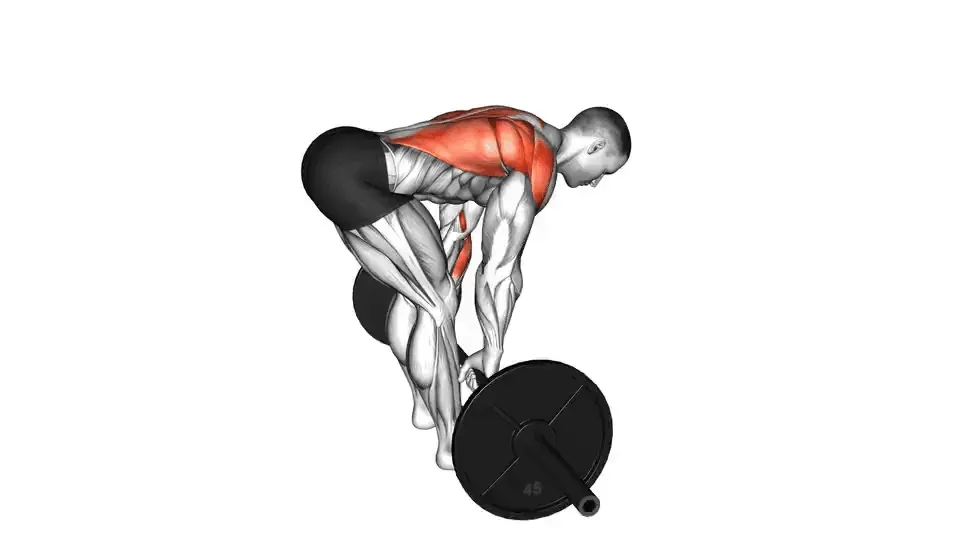
3. Barbell bent-over row
Barbell Bent Over Row
- Sets
- 3-4
- Reps
- 6-10
- Tempo
- 3-1-1-0
- Equipment
- Barbell
- Level
- Advanced
- Muscles worked
- Back · secondary : Biceps, Traps
How to do it
- Stand holding the bar with an overhand grip, hands shoulder-width apart.
- Bend your torso forward to about 45°, back flat, knees slightly bent.
- Pull the bar toward your lower abdomen, driving your elbows back.
- Lower under control to full arm extension.
Tips
- Keep your back flat and your torso angle fixed throughout the set.
- Squeeze your shoulder blades at the end of the pull.
- Avoid standing up to help the pull — your back should do the pulling, not your legs.
Mistakes to avoid
- Rounding your back, especially at the end of the set as you tire.
- Standing up on each rep to cheat with momentum.
- Using too heavy a load at the expense of range.
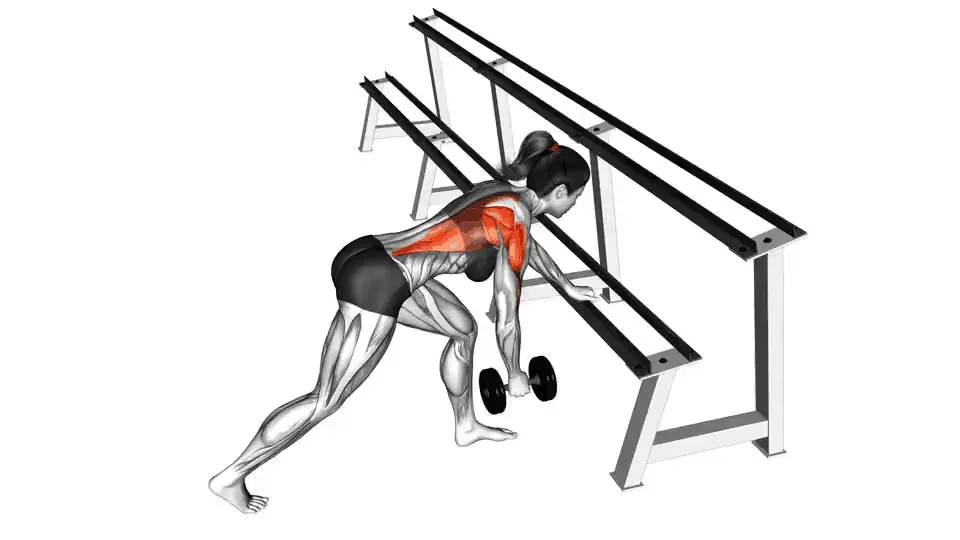
4. One-arm dumbbell row
Dumbbell One Arm Row
- Sets
- 3-4
- Reps
- 6-10
- Tempo
- 3-1-1-0
- Equipment
- Dumbbells
- Level
- Advanced
- Muscles worked
- Back · secondary : Biceps, Traps
How to do it
- Place one knee and one hand on a bench, other foot on the floor, dumbbell in your free hand.
- Keep your back flat and parallel to the floor.
- Pull the dumbbell toward your hip, driving your elbow back.
- Lower under control to full arm extension, then switch sides.
Tips
- Supporting yourself on the bench stabilizes your torso for a stricter pull.
- Keep your hips square to the floor, without rotating during the pull.
- Squeeze your shoulder blade at the end of the movement.
Mistakes to avoid
- Rotating your torso to help the pull.
- Rounding your back as you tire.
- Using momentum instead of a controlled pull.
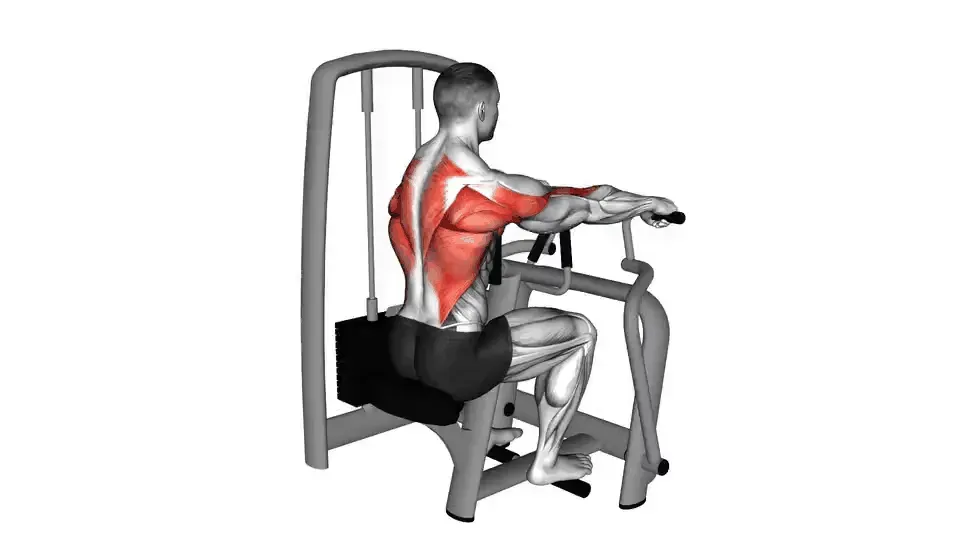
5. Seated row machine
Lever Seated Row
- Sets
- 3-4
- Reps
- 6-10
- Tempo
- 3-1-1-0
- Equipment
- Machine
- Level
- Intermediate
- Muscles worked
- Back · secondary : Biceps, Traps
How to do it
- Sit in the machine, feet braced against the footplates, handles in hand.
- Keep your torso upright and stable.
- Pull the handles toward your abdomen, driving your elbows back.
- Lower under control to full arm extension.
Tips
- The machine guides the path, letting you focus on contracting your back.
- Keep your torso still throughout the set.
- Squeeze your shoulder blades at the end of the pull.
Mistakes to avoid
- Rocking your torso back and forth to help the pull.
- Using too heavy a load with jerky movements.
- Letting your elbows flare far away from your body.
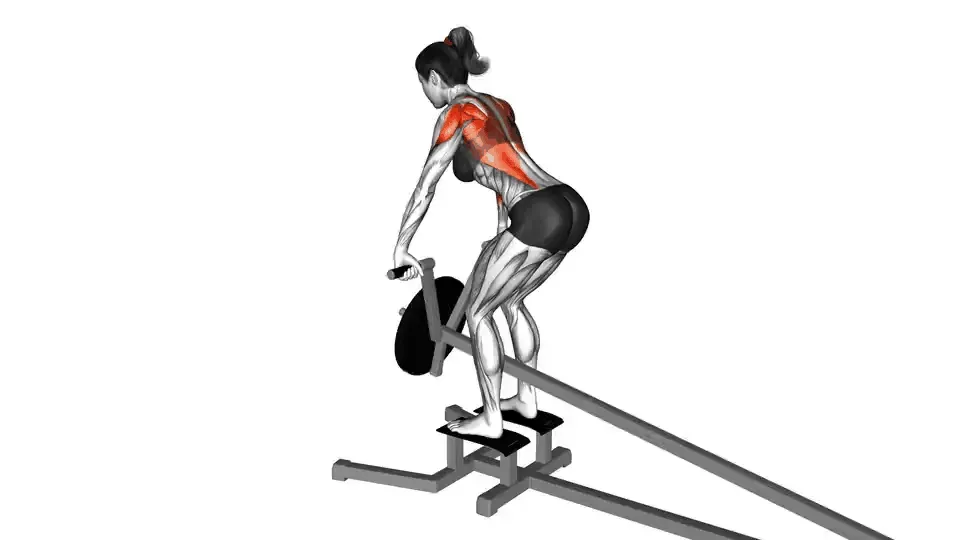
6. T-bar row
- Sets
- 3-4
- Reps
- 6-10
- Tempo
- 3-1-1-0
- Equipment
- Machine
- Level
- Intermediate
- Muscles worked
- Back · secondary : Biceps, Traps
How to do it
- Stand over the floor-anchored T-bar, torso bent forward, back flat.
- Grab the V-handle with both hands.
- Pull the bar toward your torso, driving your elbows back.
- Lower under control to full arm extension.
Tips
- The neutral V grip works your back at an angle between a wide and a close row.
- Keep your back flat and your torso still throughout the set.
- Squeeze your shoulder blades at the end of the pull.
Mistakes to avoid
- Standing up to help the pull.
- Rounding your back as you tire.
- Using too heavy a load that breaks down your technique.
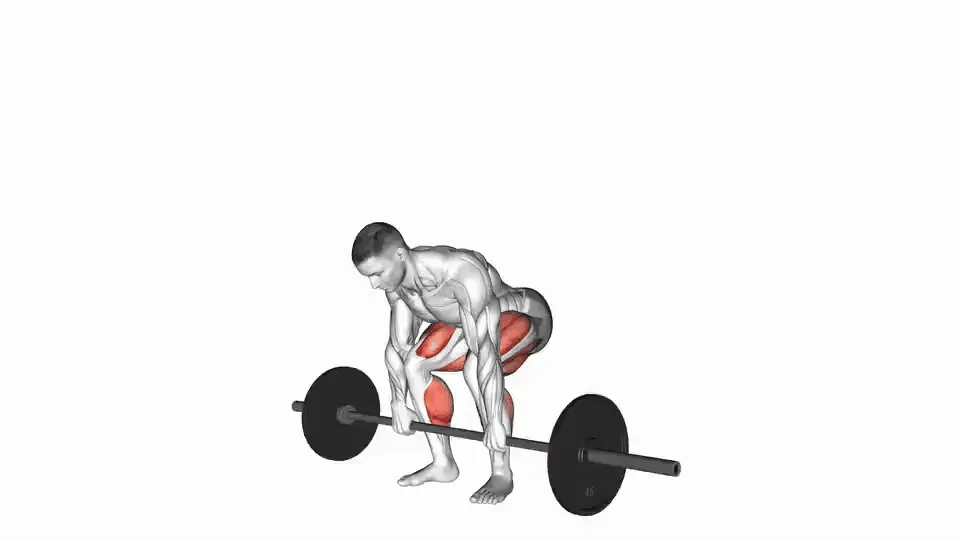
7. Deadlift
Barbell Deadlift
- Sets
- 3-4
- Reps
- 6-10
- Tempo
- 3-1-1-0
- Equipment
- Barbell
- Level
- Advanced
- Muscles worked
- Back, Glutes · secondary : Hamstrings
How to do it
- Stand facing the bar on the floor, feet hip-width apart, bar over the middle of your feet.
- Bend your hips and knees to grab the bar, back flat, chest up.
- Push into the floor to straighten your legs and hips at the same time, bar close to your legs.
- Lower the bar under control by bending your hips first, then your knees.
Tips
- Keep your back flat throughout the pull, from the floor to full extension.
- Keep the bar in contact with your legs all the way up.
- Push the floor away from you rather than thinking about lifting the bar.
Mistakes to avoid
- Rounding your lower back as the bar leaves the floor.
- Letting the bar drift away from your legs.
- Pulling with your back before your legs have started the movement.
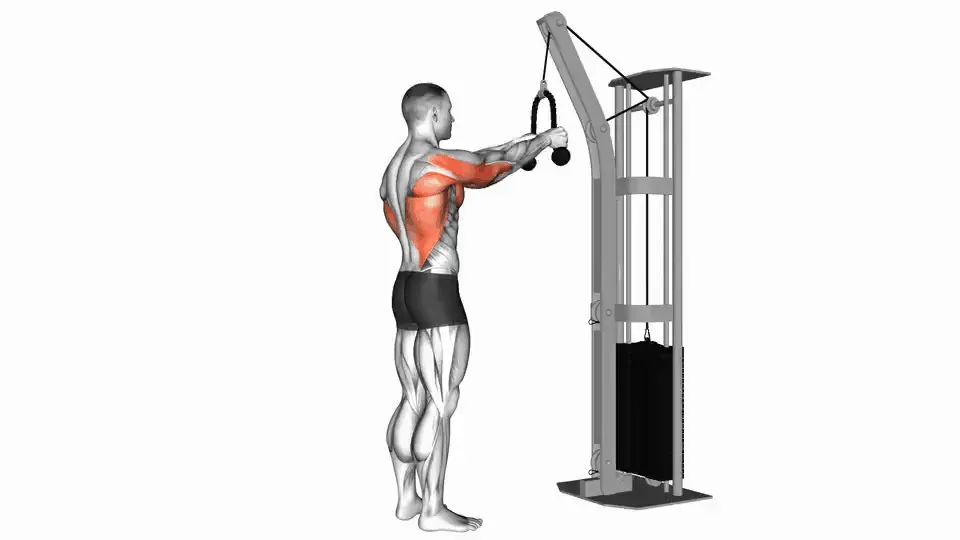
8. Straight-arm cable pulldown
Cable Straight Arm Pulldown
- Sets
- 3-4
- Reps
- 6-10
- Tempo
- 3-1-1-0
- Equipment
- Cable
- Level
- Intermediate
- Muscles worked
- Back · secondary : Triceps
How to do it
- Stand facing the high pulley, bar held with an overhand grip, arms extended in front of you.
- Keep your arms completely straight throughout the movement.
- Pull the bar down to your thighs, pivoting only at your shoulders.
- Come back up with control to the starting position.
Tips
- Keep a slight, fixed bend in your elbows, without bending them further during the movement.
- This movement isolates your lats without help from your biceps.
- Squeeze your back hard in the bottom position before going back up.
Mistakes to avoid
- Bending your elbows during the pull, which turns it into a regular pulldown.
- Using too heavy a load that forces you to bend your arms.
- Leaning too far forward to help the movement.
Tempo is read in seconds: lowering, pause at the bottom, lifting, pause at the top. “3-1-1-0” means three seconds down, a one-second pause, one second up, then straight into the next rep.
How to combine them
There is no need to do them all in one session. Two or three exercises per muscle are enough: a heavy compound lift first, while you are fresh, then one or two more targeted moves.
Aim for roughly 10 to 20 sets per muscle per week, spread over two sessions, with sets taken to within 1 to 3 reps of failure. Beyond that, fatigue grows faster than results.
Keep the same main lifts for at least eight weeks: it is the only way to tell whether you are genuinely progressing.
341 exercises for this muscle in the app