

Ab exercises
The 8 staple movements, taken from the 3,215 exercise guides in the SETR app: technique, recommended volume, cues and classic mistakes.
The rectus abdominis curls the spine; the transverse abdominis and obliques stabilise it. Crunches and leg raises train the first; planks and ab-wheel rollouts the others. Like any muscle, abs respond to load and reps taken close to failure, not to hundreds of easy crunches.
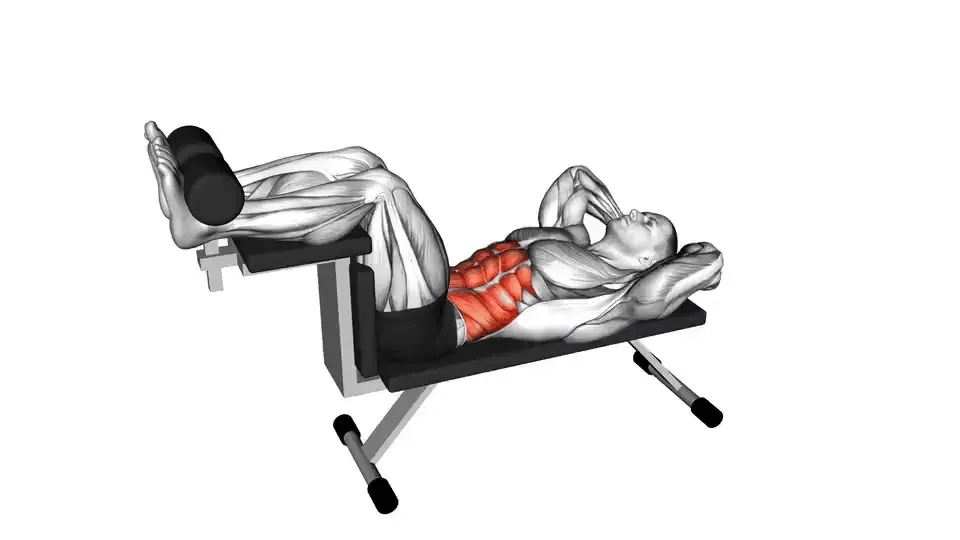
1. Crunch
- Sets
- 3-4
- Reps
- 12-20
- Tempo
- 2-0-2-0
- Equipment
- Bench
- Level
- Beginner
- Muscles worked
- Abs
How to do it
- Lie on your back, knees bent, feet on the floor, hands behind your head or crossed over your chest.
- Curl your torso up, lifting your shoulder blades off the floor.
- Squeeze your abs hard in the top position, without going all the way to sitting.
- Lower with control back to the starting position.
Tips
- Keep your lower back on the floor throughout the movement — only your shoulder blades lift.
- Avoid pulling on your neck with your hands.
- Breathe out as you curl up to contract your abs better.
Mistakes to avoid
- Pulling on your head and neck with your hands.
- Using momentum instead of a controlled contraction.
- Lifting your whole back like a full sit-up.
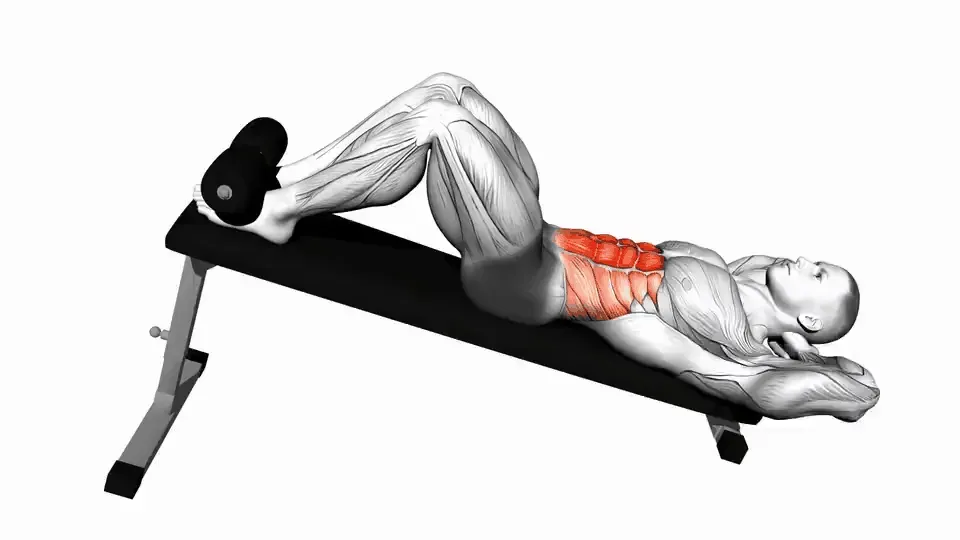
2. Decline crunch
- Sets
- 3-4
- Reps
- 12-20
- Tempo
- 2-0-2-0
- Equipment
- Bench
- Level
- Beginner
- Muscles worked
- Abs
How to do it
- Lie on a decline bench, feet hooked under the pads, hands behind your head.
- Curl your torso up by contracting your abs.
- Squeeze hard in the top position.
- Lower with control back to the starting position.
Tips
- The decline increases range and intensity compared with a floor crunch.
- Keep your lower back in contact with the bench at the start, without arching too much.
- Avoid pulling on your neck with your hands.
Mistakes to avoid
- Pulling on your head and neck with your hands.
- Using momentum to sit up quickly.
- Not controlling the lowering phase.
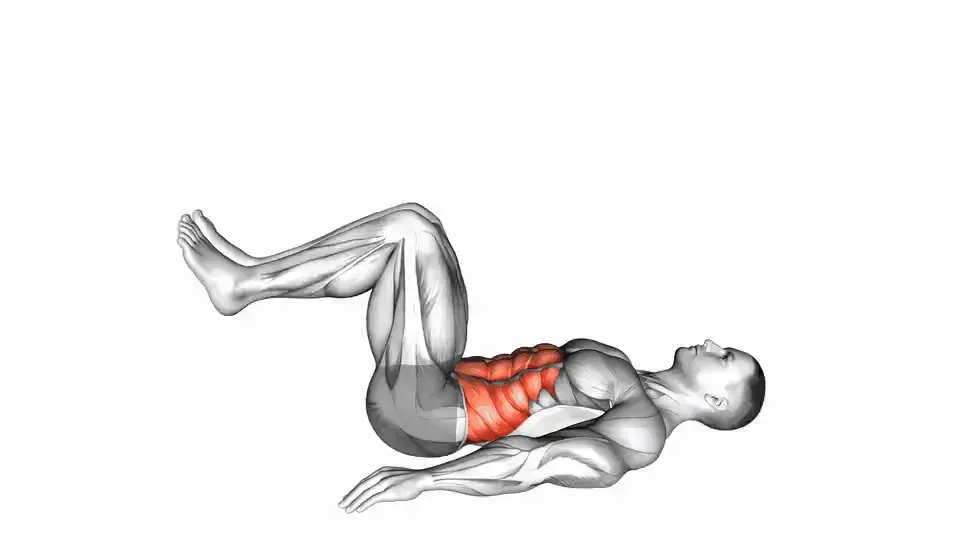
3. Reverse crunch
- Sets
- 3-4
- Reps
- 12-20
- Tempo
- 2-0-2-0
- Equipment
- Bodyweight
- Level
- Beginner
- Muscles worked
- Abs
How to do it
- Lie on your back, legs bent at 90°, hands on the floor at your sides.
- Keep your upper back and head on the floor.
- Contract your lower abs to lift your pelvis slightly, bringing your knees toward your chest.
- Lower your pelvis under control to the starting position.
Tips
- The movement comes from a slight pelvic lift, not a big leg swing.
- Avoid using leg momentum to lift your pelvis.
- Keep the movement slow and controlled to maximize the ab contraction.
Mistakes to avoid
- Using leg momentum instead of a controlled ab contraction.
- Making too big and uncontrolled a pelvic movement.
- Pushing your hands into the floor to help the movement.
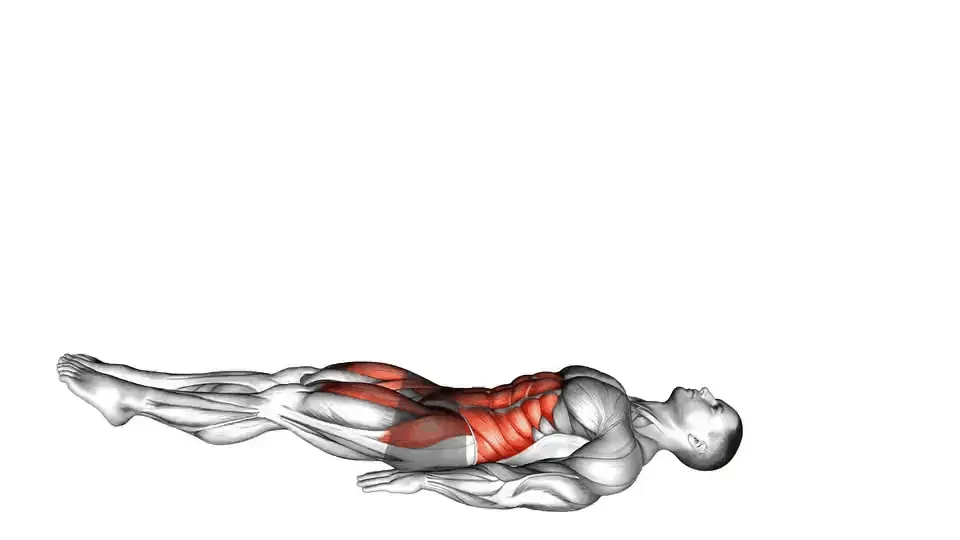
4. Lying leg raise
- Sets
- 3-4
- Reps
- 12-20
- Tempo
- 2-0-2-0
- Equipment
- Bodyweight
- Level
- Beginner
- Muscles worked
- Abs
How to do it
- Lie on your back, legs straight, hands under your glutes or on the floor at your sides.
- Keep your lower back pressed into the floor.
- Raise your straight legs toward vertical by contracting your abs.
- Lower under control until a few centimeters from the floor.
Tips
- Keep your lower back pressed into the floor throughout the movement.
- Control the descent; it's the most demanding phase.
- Shorten the range if your lower back starts to arch.
Mistakes to avoid
- Letting your lower back arch.
- Using momentum to raise your legs quickly.
- Letting your legs drop without control.
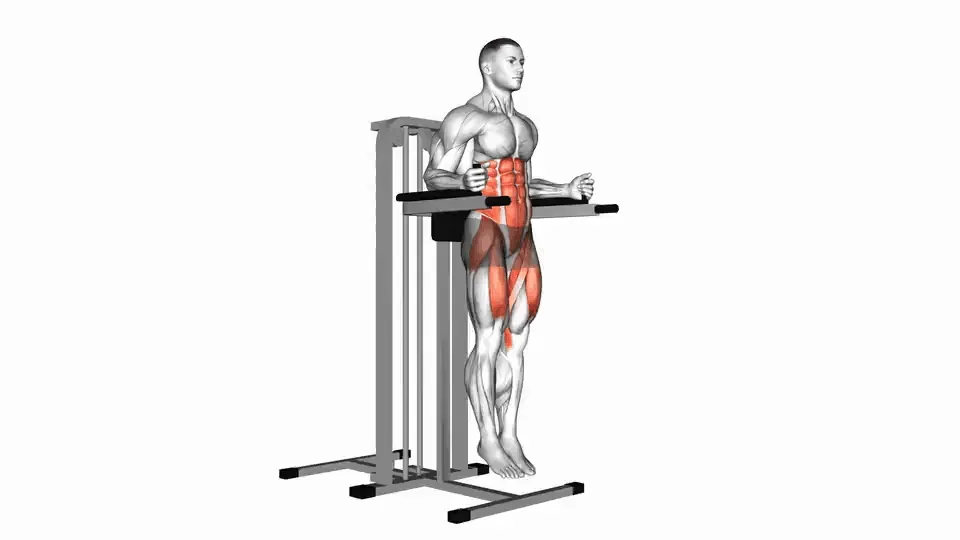
5. Captain's chair leg raise
Captains Chair Leg Raise
- Sets
- 3-4
- Reps
- 12-20
- Tempo
- 2-0-2-0
- Equipment
- Bodyweight
- Level
- Beginner
- Muscles worked
- Abs
How to do it
- Set yourself up in the captain's chair, forearms on the pads, back pressed against the backrest.
- Keep your body still, without swinging.
- Raise your knees or straight legs toward your chest by contracting your abs.
- Lower under control to full extension.
Tips
- Keep your back pressed against the backrest throughout the set, without lifting it away.
- Control the descent rather than letting your legs drop.
- Avoid swinging to build momentum.
Mistakes to avoid
- Swinging to help raise your legs.
- Lifting your back away from the backrest.
- Letting your legs drop quickly in the eccentric phase.
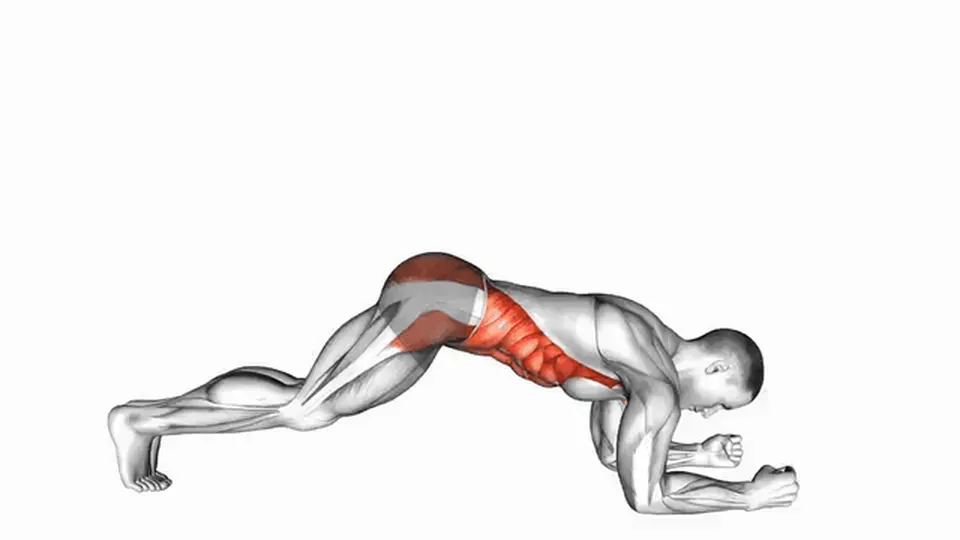
6. Plank
Front Plank
- Sets
- 3-4
- Reps
- 12-20
- Tempo
- 2-0-2-0
- Equipment
- Bodyweight
- Level
- Beginner
- Muscles worked
- Abs · secondary : Shoulders, Back
How to do it
- Get onto your forearms, elbows stacked under your shoulders, feet hip-width apart.
- Line up your ankles, hips and shoulders in a single line.
- Squeeze your glutes, tuck your pelvis and brace your abs.
- Hold the position while breathing normally, then lower your knees.
Tips
- Count in seconds held: 30 to 60 quality seconds beat three sagging minutes.
- Push your forearms into the floor to spread your shoulder blades.
- Look at the floor between your hands to keep your neck long.
Mistakes to avoid
- Letting your hips sag.
- Raising your glutes into a V.
- Holding your breath during the hold.
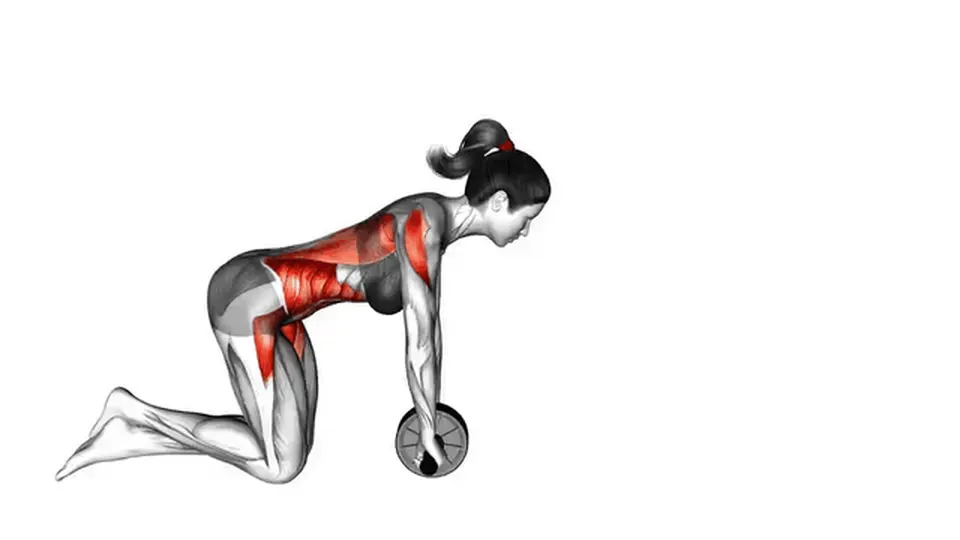
7. Ab wheel rollout
- Sets
- 3-4
- Reps
- 12-20
- Tempo
- 2-0-2-0
- Equipment
- Ab Wheel
- Level
- Advanced
- Muscles worked
- Abs · secondary : Back, Shoulders
How to do it
- Kneel with the ab wheel on the floor under your shoulders, arms straight.
- Tuck your pelvis into a posterior tilt and brace your abs hard.
- Roll the wheel forward as far as you can control, arms staying straight.
- Bring the wheel back toward your knees, keeping your back locked.
Tips
- Holding the posterior pelvic tilt is what protects your lower back.
- Only go as far as you can come back without arching your back.
- Put a mat under your knees for comfort.
Mistakes to avoid
- Letting your lower back arch at full extension.
- Sitting back on your heels to bring the wheel back.
- Going too far in your first sessions.
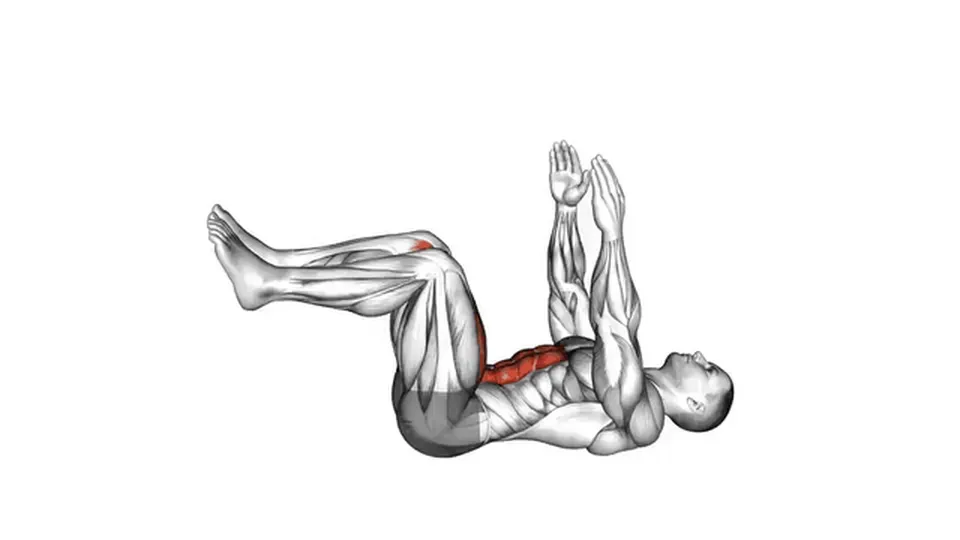
8. Dead bug
- Sets
- 3-4
- Reps
- 12-20
- Tempo
- 2-0-2-0
- Equipment
- Bodyweight
- Level
- Beginner
- Muscles worked
- Abs
How to do it
- Lie on your back, arms extended toward the ceiling, hips and knees bent at 90°.
- Press your lower back firmly into the floor and keep that contact throughout the set.
- Slowly extend one arm behind your head and the opposite leg toward the floor.
- Return to the starting position and switch diagonals.
Tips
- Your lower back must never lift off: shorten the range if it arches.
- Breathe out as you extend your arm and leg.
- The go-to exercise for learning to stabilize your core.
Mistakes to avoid
- Letting your lower back arch.
- Going too fast at the expense of control.
- Holding your breath during the extension.
Tempo is read in seconds: lowering, pause at the bottom, lifting, pause at the top. “3-1-1-0” means three seconds down, a one-second pause, one second up, then straight into the next rep.
How to combine them
There is no need to do them all in one session. Two or three exercises per muscle are enough: a heavy compound lift first, while you are fresh, then one or two more targeted moves.
Aim for roughly 10 to 20 sets per muscle per week, spread over two sessions, with sets taken to within 1 to 3 reps of failure. Beyond that, fatigue grows faster than results.
Keep the same main lifts for at least eight weeks: it is the only way to tell whether you are genuinely progressing.
412 exercises for this muscle in the app