

Chest exercises
The 8 staple movements, taken from the 3,215 exercise guides in the SETR app: technique, recommended volume, cues and classic mistakes.
The pecs push the arms forward and bring them in towards the midline. Building them takes two families of movement: presses, which let you load heavy, and flyes, which stretch the muscle under tension. An incline shifts the work towards the upper chest; a decline towards the lower chest.
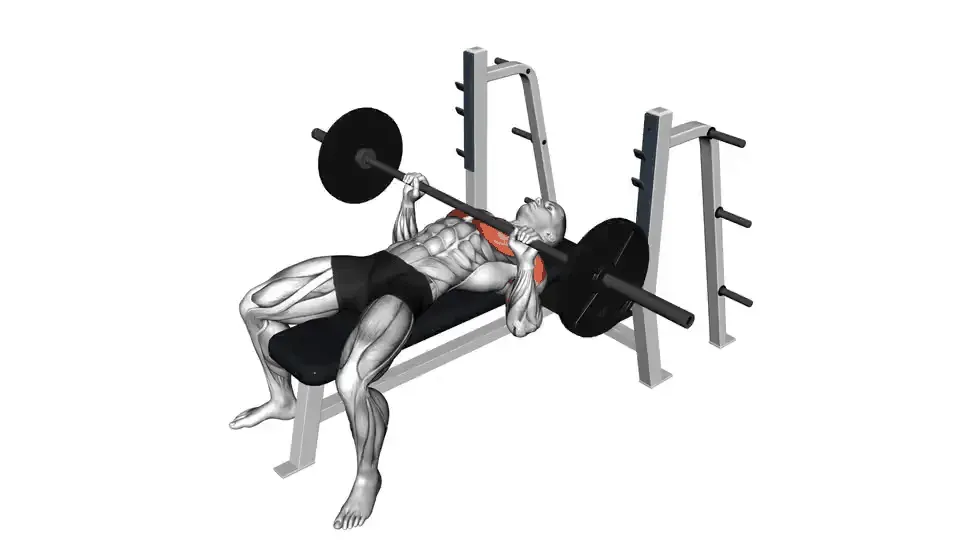
1. Barbell bench press
- Sets
- 3-4
- Reps
- 6-10
- Tempo
- 3-1-1-0
- Equipment
- Barbell
- Level
- Advanced
- Muscles worked
- Chest · secondary : Triceps, Shoulders
How to do it
- Lie on the bench, eyes under the bar, feet firmly planted on the floor.
- Grab the bar with an overhand grip, slightly wider than your shoulders.
- Lower the bar under control until it lightly touches the middle of your chest.
- Press the bar up to full arm extension.
Tips
- Keep your shoulder blades squeezed and a slight natural arch in your lower back.
- Keep your elbows at about 45° from your torso rather than flared all the way out.
- Drive your feet into the floor to stabilize your whole body during the press.
Mistakes to avoid
- Bouncing the bar off your chest instead of a controlled touch.
- Flaring your elbows too wide, which stresses your shoulders.
- Lifting your glutes off the bench during the press.
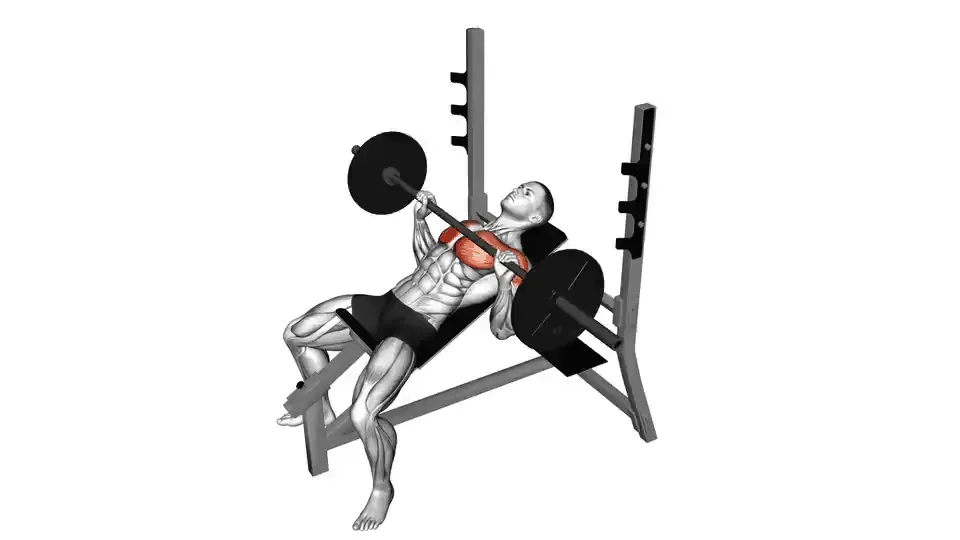
2. Incline barbell bench press
- Sets
- 3-4
- Reps
- 6-10
- Tempo
- 3-1-1-0
- Equipment
- Barbell
- Level
- Advanced
- Muscles worked
- Chest · secondary : Triceps, Shoulders
How to do it
- Lie on an incline bench and grab the bar with an overhand grip, slightly wider than your shoulders.
- Lower the bar until it lightly touches your upper chest.
- Press the bar up to full arm extension.
- Keep your shoulder blades squeezed against the bench throughout the movement.
Tips
- The incline targets your upper chest more than a flat bench press.
- An incline between 30° and 45° effectively targets your upper chest without overloading your shoulders.
- Keep your elbows at about 45° from your torso.
Mistakes to avoid
- Using too steep an incline, which shifts most of the work to your shoulders.
- Bouncing the bar off your chest.
- Flaring your elbows too wide.
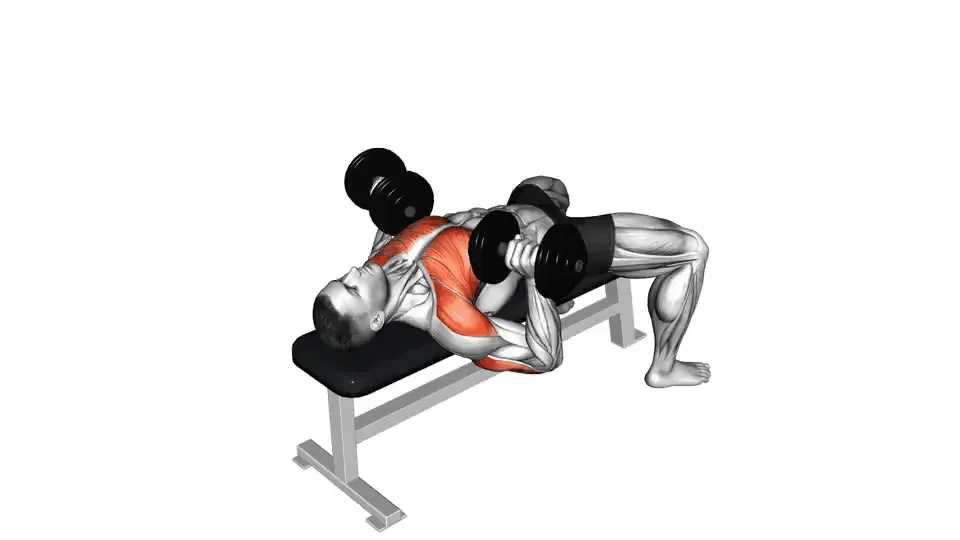
3. Dumbbell bench press
- Sets
- 3-4
- Reps
- 6-10
- Tempo
- 3-1-1-0
- Equipment
- Dumbbells
- Level
- Intermediate
- Muscles worked
- Chest · secondary : Triceps, Shoulders
How to do it
- Lie on the bench, a dumbbell in each hand at chest level, elbows bent.
- Press the dumbbells up to full arm extension.
- Lower under control until you feel a stretch in your chest.
- Keep your elbows at about 45° from your torso throughout the movement.
Tips
- Dumbbells allow a deeper range and more single-arm work than a barbell.
- Keep your shoulder blades squeezed against the bench throughout the set.
- Control the path of the dumbbells, which can drift together at the top of the movement.
Mistakes to avoid
- Letting the dumbbells drop too low, stressing your shoulders.
- Flaring your elbows too wide.
- Losing control of the dumbbells at the end of the set as fatigue sets in.
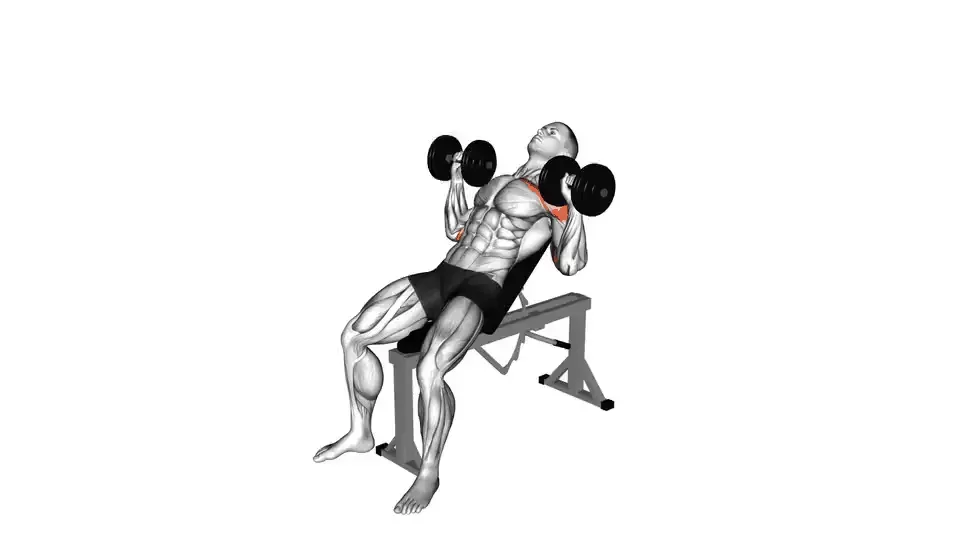
4. Incline dumbbell press
- Sets
- 3-4
- Reps
- 6-10
- Tempo
- 3-1-1-0
- Equipment
- Dumbbells
- Level
- Intermediate
- Muscles worked
- Chest · secondary : Triceps, Shoulders
How to do it
- Lie on an incline bench, a dumbbell in each hand at upper chest level.
- Press the dumbbells up to full arm extension.
- Lower under control until you feel a stretch in your upper chest.
- Keep your elbows at about 45° from your torso throughout the movement.
Tips
- The incline targets your upper chest more than a flat press.
- An incline between 30° and 45° stays effective without overloading your shoulders.
- Control the path of the dumbbells, which can drift together at the top of the movement.
Mistakes to avoid
- Using too steep an incline, which shifts most of the work to your shoulders.
- Letting the dumbbells drop too low.
- Flaring your elbows too wide.
5. Dumbbell fly
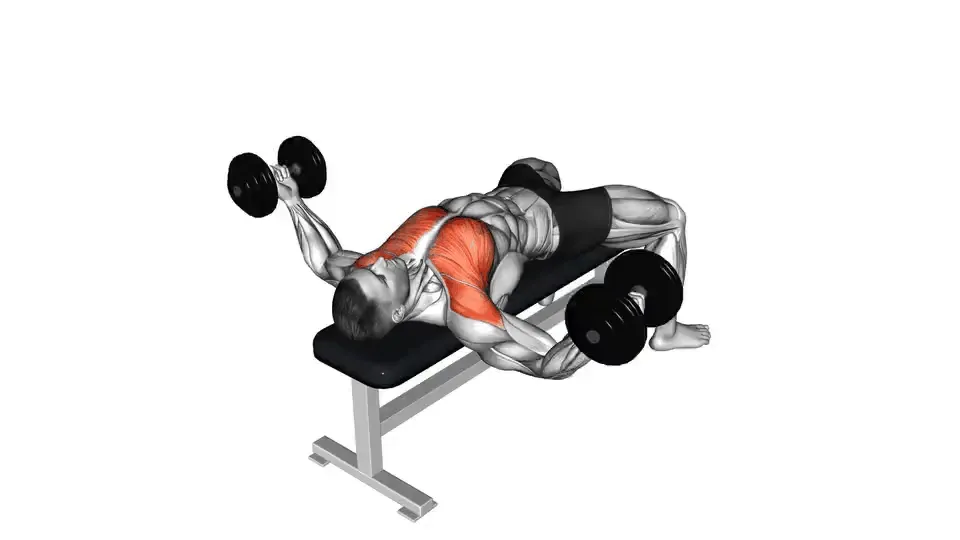
- Sets
- 3-4
- Reps
- 10-15
- Tempo
- 3-0-1-0
- Equipment
- Dumbbells
- Level
- Beginner
- Muscles worked
- Chest · secondary : Shoulders
How to do it
- Lie on the bench, a dumbbell in each hand, arms extended above your chest.
- Keep a slight, fixed bend in your elbows throughout the movement.
- Lower your arms out to the sides in an arc until you feel a stretch in your chest.
- Bring the dumbbells back up along the same arc to the starting position.
Tips
- Keep a slight, fixed bend in your elbows, without bending them further on the way down.
- Imagine hugging a big tree trunk to picture the arcing path.
- Squeeze your chest hard at the end of the movement, without knocking the dumbbells together.
Mistakes to avoid
- Bending your elbows more, turning the fly into a press.
- Lowering too far, which puts excessive stress on your shoulders.
- Using too heavy a load that breaks down your technique.
6. Cable crossover
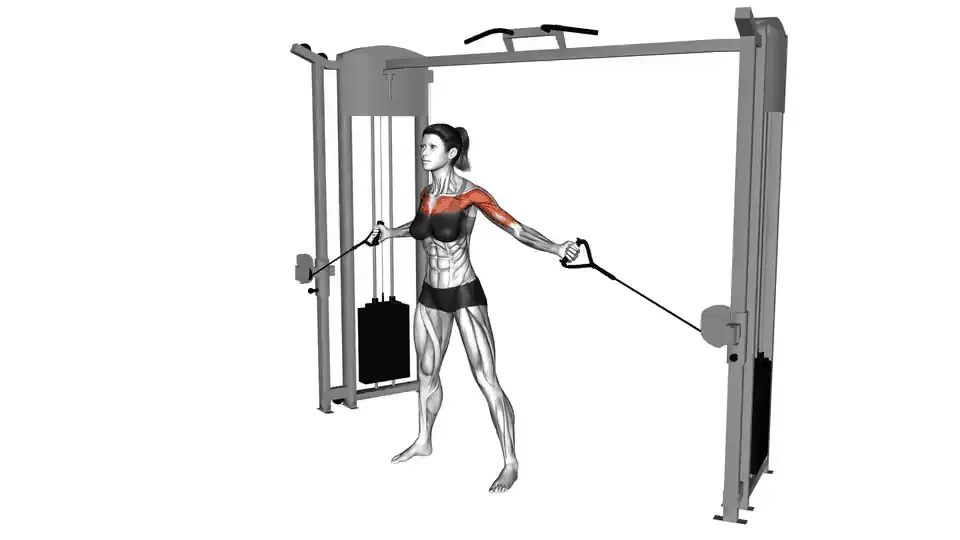
- Sets
- 3-4
- Reps
- 10-15
- Tempo
- 3-0-1-0
- Equipment
- Cable
- Level
- Beginner
- Muscles worked
- Chest · secondary : Shoulders
How to do it
- Stand between two high pulleys, handles in hand, arms extended out to the sides.
- Keep a slight, fixed bend in your elbows throughout the movement.
- Bring your hands down and in front of you, crossing them slightly.
- Return to the starting position with control.
Tips
- The angle of the high pulleys creates a downward path that targets your lower chest.
- Keep a slight, fixed bend in your elbows throughout the movement.
- Squeeze your chest hard at the end of the movement, hands crossed.
Mistakes to avoid
- Bending your elbows more, turning the fly into a press.
- Using torso momentum to help the movement.
- Releasing the tension abruptly at the end of the movement.
7. Pec deck fly
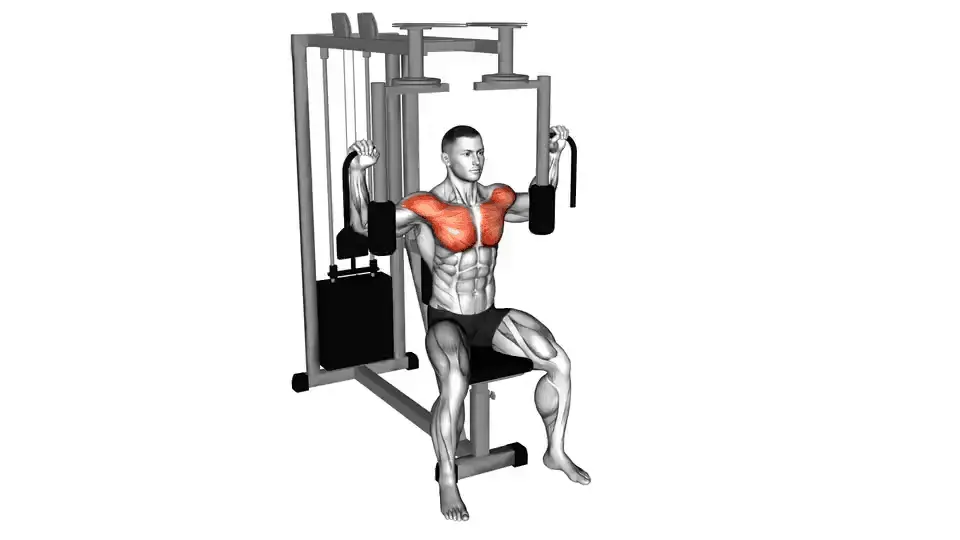
- Sets
- 3-4
- Reps
- 10-15
- Tempo
- 3-0-1-0
- Equipment
- Machine
- Level
- Beginner
- Muscles worked
- Chest · secondary : Shoulders
How to do it
- Sit in the pec deck machine, back braced against the backrest, forearms on the padded supports.
- Keep a slight, fixed bend in your elbows throughout the movement.
- Bring your arms together in front of your chest.
- Return to the starting position with control.
Tips
- The machine guides the path, letting you focus on squeezing your pecs.
- Keep your back pressed against the backrest throughout the set.
- Squeeze your chest hard at the end of the movement, without banging the pads together.
Mistakes to avoid
- Using too heavy a load with jerky movements.
- Lifting your back off the backrest to help the movement.
- Releasing too quickly on the way back.
8. Chest dip
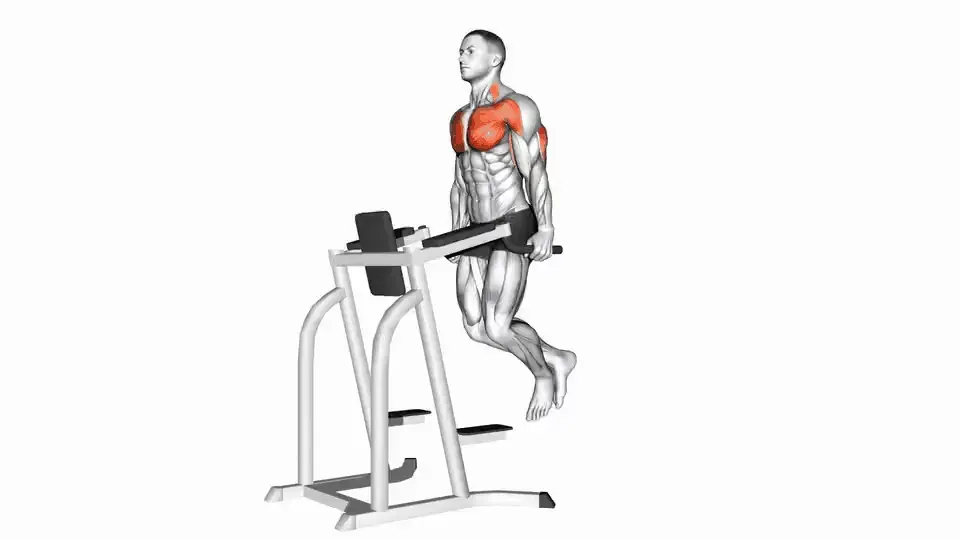
- Sets
- 3-4
- Reps
- 6-10
- Tempo
- 3-1-1-0
- Equipment
- Dip Bars
- Level
- Intermediate
- Muscles worked
- Chest · secondary : Triceps, Shoulders
How to do it
- Set yourself up on the parallel bars, arms straight, body leaning slightly forward.
- Lower your body by bending your elbows, keeping your torso leaning forward.
- Lower until you feel a comfortable stretch in your chest.
- Press back up to full arm lockout.
Tips
- Leaning your torso forward shifts more of the work to your chest than your triceps.
- Control the descent — this variation puts a lot of stretch tension on your shoulders.
- Keep your elbows slightly flared to emphasize the chest work.
Mistakes to avoid
- Lowering too far and stressing your shoulder joint.
- Staying too upright, which turns it into more of a triceps dip.
- Using momentum to bounce at the bottom of the movement.
Tempo is read in seconds: lowering, pause at the bottom, lifting, pause at the top. “3-1-1-0” means three seconds down, a one-second pause, one second up, then straight into the next rep.
How to combine them
There is no need to do them all in one session. Two or three exercises per muscle are enough: a heavy compound lift first, while you are fresh, then one or two more targeted moves.
Aim for roughly 10 to 20 sets per muscle per week, spread over two sessions, with sets taken to within 1 to 3 reps of failure. Beyond that, fatigue grows faster than results.
Keep the same main lifts for at least eight weeks: it is the only way to tell whether you are genuinely progressing.
283 exercises for this muscle in the app