

Trap exercises
The 7 staple movements, taken from the 3,215 exercise guides in the SETR app: technique, recommended volume, cues and classic mistakes.
The trapezius covers the upper back in three parts. The upper traps lift the shoulders, which is what shrugs train. The middle and lower traps pull the shoulder blades together and down, and already get work from rows. Heavy loads held for time, such as rack pulls, also hammer the upper traps.
1. Barbell shrug
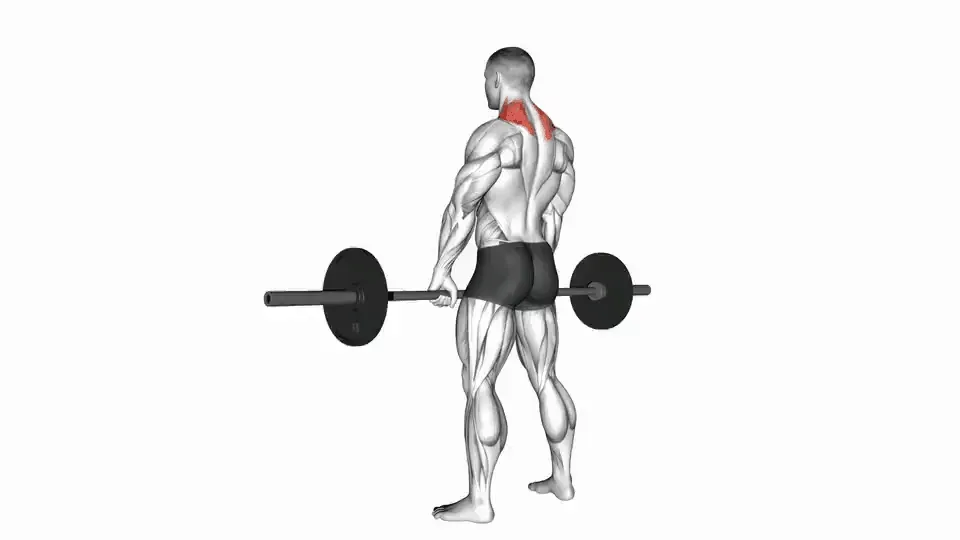
- Sets
- 3-4
- Reps
- 10-15
- Tempo
- 3-0-1-0
- Equipment
- Barbell
- Level
- Beginner
- Muscles worked
- Traps · secondary : Forearms
How to do it
- Stand holding a barbell with an overhand grip in front of your thighs, arms straight.
- Keep your torso upright and your feet planted.
- Raise your shoulders straight up toward your ears.
- Lower under control to a full stretch.
Tips
- Raise and lower your shoulders in a straight line, without rolling them.
- Use a full range, letting your shoulders drop all the way at the bottom.
- Lifting straps can help if your grip becomes the limiting factor.
Mistakes to avoid
- Rolling your shoulders forward or back instead of lifting straight up.
- Using your arms to help hoist the weight.
- Shortening your range with too heavy a load.
2. Dumbbell shrug
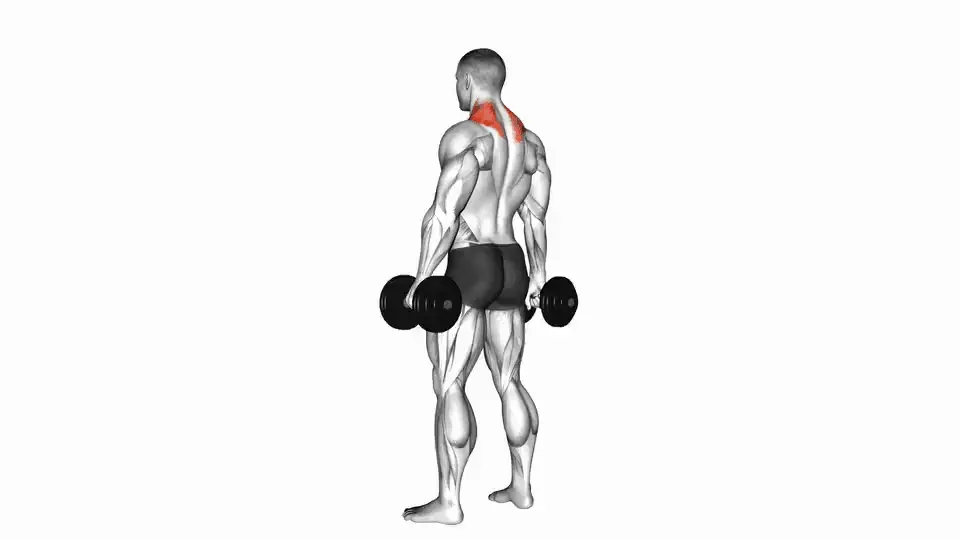
- Sets
- 3-4
- Reps
- 10-15
- Tempo
- 3-0-1-0
- Equipment
- Dumbbells
- Level
- Beginner
- Muscles worked
- Traps
How to do it
- Stand holding a dumbbell in each hand at your thighs.
- Keep your torso upright and your feet planted.
- Raise your shoulders straight up toward your ears.
- Lower under control to a full stretch.
Tips
- Dumbbells allow a more natural path than a barbell — keep it vertical.
- Use a full range, letting your shoulders drop all the way at the bottom.
- Pause for one second at the top of each rep.
Mistakes to avoid
- Rolling your shoulders instead of lifting straight up.
- Using your arms to help hoist the weight.
- Rushing the movement without holding the squeeze.
3. Cable shrug
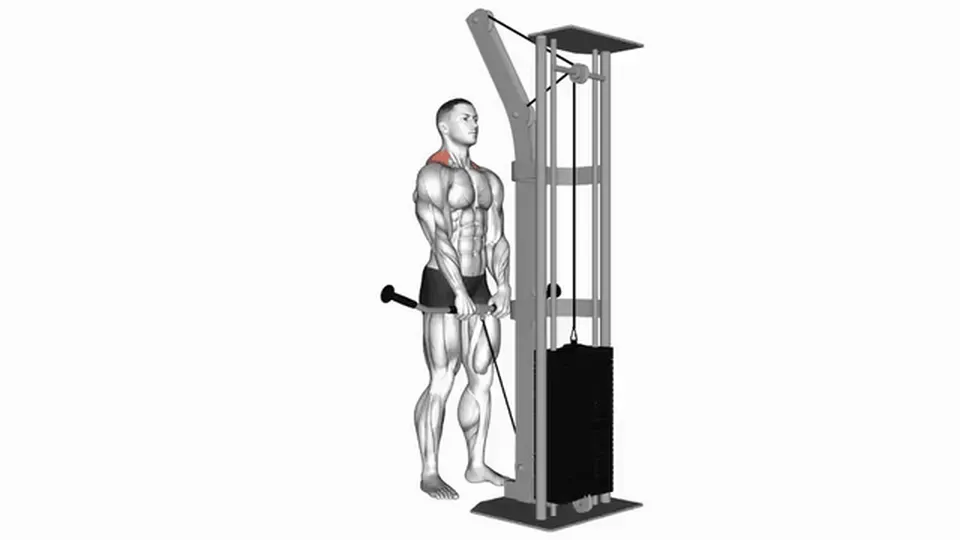
- Sets
- 3-4
- Reps
- 10-15
- Tempo
- 3-0-1-0
- Equipment
- Cable
- Level
- Beginner
- Muscles worked
- Traps · secondary : Shoulders
How to do it
- Attach a bar to the low pulley and grab it with an overhand grip, arms straight.
- Take a step back, torso upright, shoulders relaxed down.
- Shrug your shoulders toward your ears without bending your elbows.
- Lower slowly to a full trap stretch.
Tips
- The pulley keeps tension even in the bottom position, unlike dumbbells.
- Arms straight from start to finish: the slightest bend shifts the effort to your biceps.
- Hold a one-second squeeze at the top.
Mistakes to avoid
- Bending your elbows to go higher.
- Rolling your shoulders in circles.
- Leaning back to make up for the cable's pull.
4. Smith machine shrug
Smith Shrug
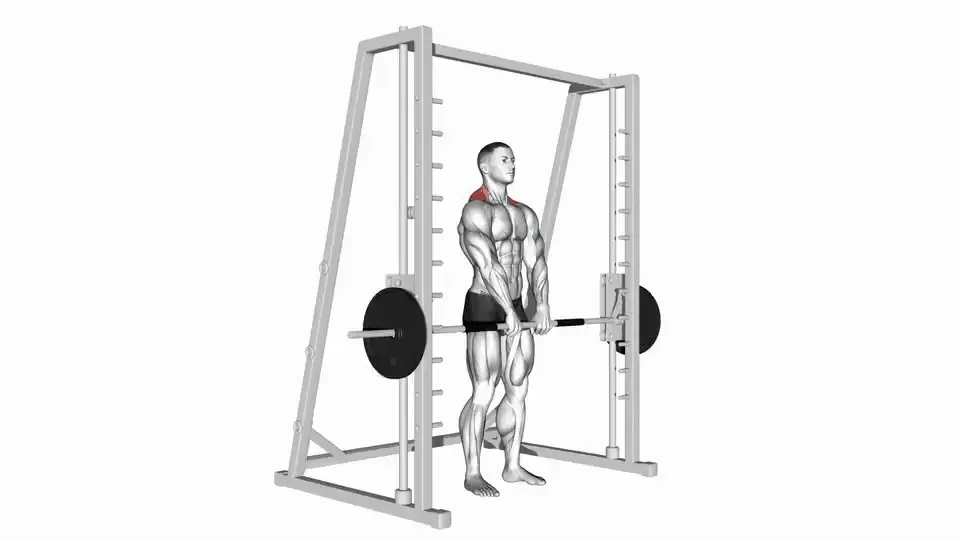
- Sets
- 3-4
- Reps
- 10-15
- Tempo
- 3-0-1-0
- Equipment
- Smith Machine
- Level
- Beginner
- Muscles worked
- Traps
How to do it
- Stand facing the Smith machine bar, shoulder-width grip in front of your thighs.
- Unlock the bar and stand up, torso upright.
- Raise your shoulders straight up toward your ears.
- Lower under control to a full stretch.
Tips
- The guided track lets you focus entirely on squeezing your traps.
- Use a full range, letting your shoulders drop all the way at the bottom.
- Pause for one second at the top of each rep.
Mistakes to avoid
- Rolling your shoulders instead of lifting straight up.
- Using your arms to help hoist the weight.
- Shortening your range with too heavy a load.
5. Trap bar shrug
Trap Bar Standing Shrug
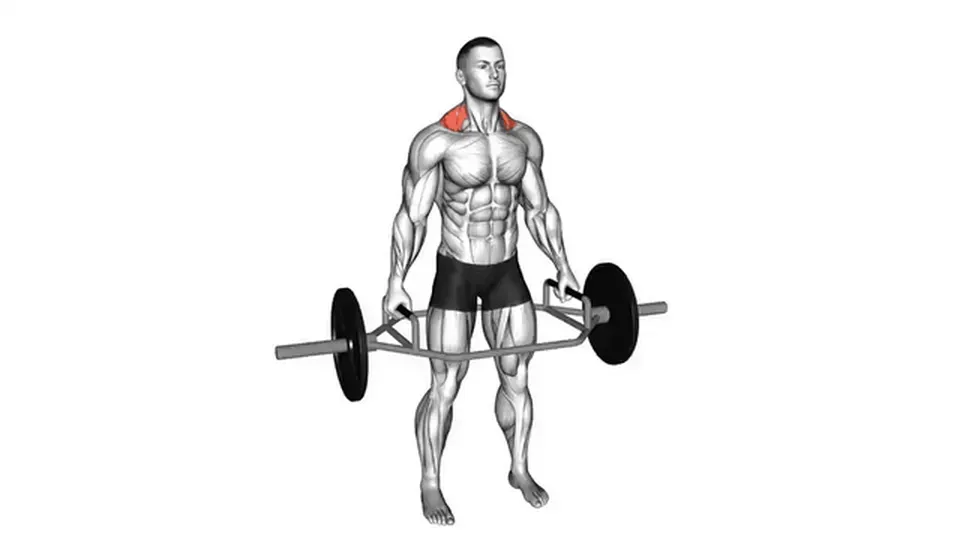
- Sets
- 3-4
- Reps
- 10-15
- Tempo
- 3-0-1-0
- Equipment
- Hex Bar
- Level
- Beginner
- Muscles worked
- Traps · secondary : Shoulders, Forearms
How to do it
- Stand in the center of the hex bar and grab the side handles, back flat.
- Stand up with your legs straight, arms straight, shoulders relaxed down.
- Shrug your shoulders toward your ears without bending your elbows.
- Lower slowly to a full trap stretch.
Tips
- The neutral handles keep the load in line with your body: the best position for loading heavy.
- Use straps if your grip gives out before your traps.
- Hold a firm squeeze at the top of each rep.
Mistakes to avoid
- Rounding your back as you lift the bar off the floor.
- Bending your elbows during the shrug.
- Rolling your shoulders in circles.
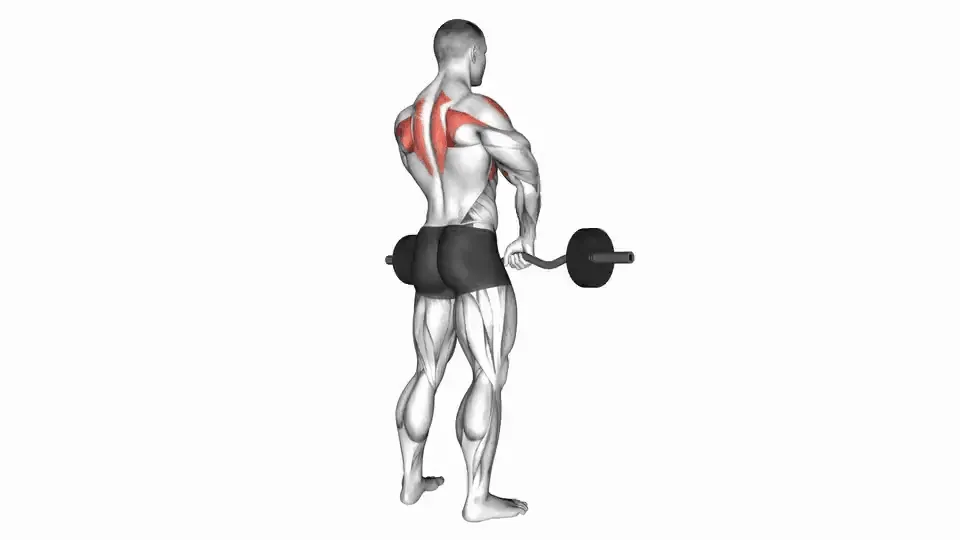
6. Barbell upright row
- Sets
- 3-4
- Reps
- 6-10
- Tempo
- 3-1-1-0
- Equipment
- Barbell
- Level
- Advanced
- Muscles worked
- Shoulders, Traps
How to do it
- Stand holding a barbell with both hands in front of your thighs, close overhand grip.
- Pull the bar straight up along your body to chest height, elbows leading the movement.
- Keep your elbows higher than your forearms throughout the pull.
- Lower the bar under control to the starting position.
Tips
- Keep the bar close to your body throughout the pull.
- Stop the pull if you feel any shoulder discomfort; full range of motion isn't required.
- Lead the movement with your elbows rather than your hands.
Mistakes to avoid
- Pulling the bar too high, which puts excessive stress on your shoulders.
- Letting the bar drift away from your body.
- Using torso momentum to help the pull.
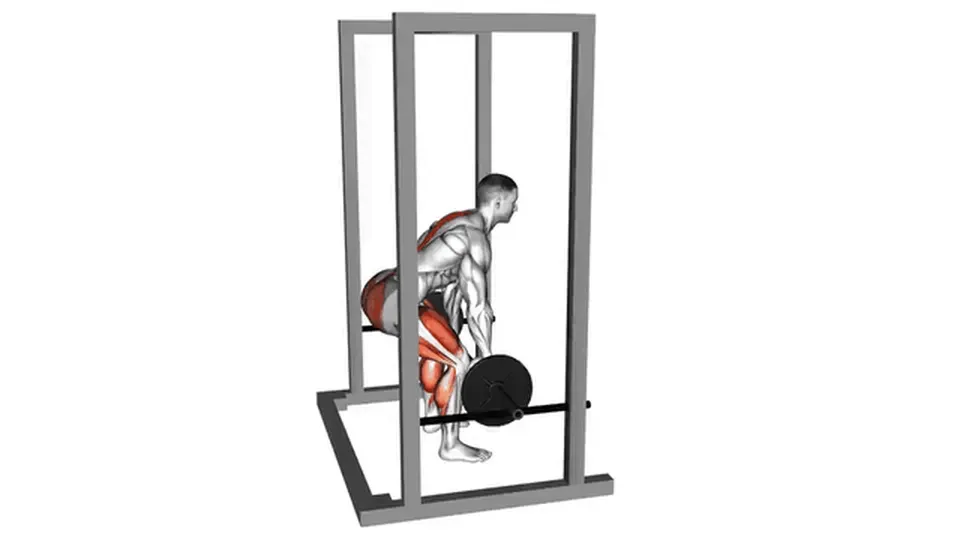
7. Rack pull
Barbell Rack Pull
- Sets
- 3-4
- Reps
- 6-10
- Tempo
- 3-1-1-0
- Equipment
- Barbell
- Level
- Intermediate
- Muscles worked
- Back · secondary : Traps, Glutes
How to do it
- Set the rack's safety pins at knee height and rest the loaded bar on them.
- Stand with your feet hip-width apart and grab the bar, back flat, chest open.
- Lift the bar by pushing through your heels and extending your hips.
- Finish standing, hips locked out and shoulder blades squeezed, then set it down under control.
Tips
- The shorter range lets you load heavier than a full deadlift.
- Set the height based on the point you want to train: higher for the lockout.
- Pause on the pins between reps.
Mistakes to avoid
- Bouncing the bar off the pins.
- Rounding your upper back under the load.
- Hyperextending your lower back at lockout.
Tempo is read in seconds: lowering, pause at the bottom, lifting, pause at the top. “3-1-1-0” means three seconds down, a one-second pause, one second up, then straight into the next rep.
How to combine them
There is no need to do them all in one session. Two or three exercises per muscle are enough: a heavy compound lift first, while you are fresh, then one or two more targeted moves.
Aim for roughly 10 to 20 sets per muscle per week, spread over two sessions, with sets taken to within 1 to 3 reps of failure. Beyond that, fatigue grows faster than results.
Keep the same main lifts for at least eight weeks: it is the only way to tell whether you are genuinely progressing.
75 exercises for this muscle in the app